Why Speaking Techniques Fail Under Pressure
Dr. Stephen Crawford
Speaker Performance Architect
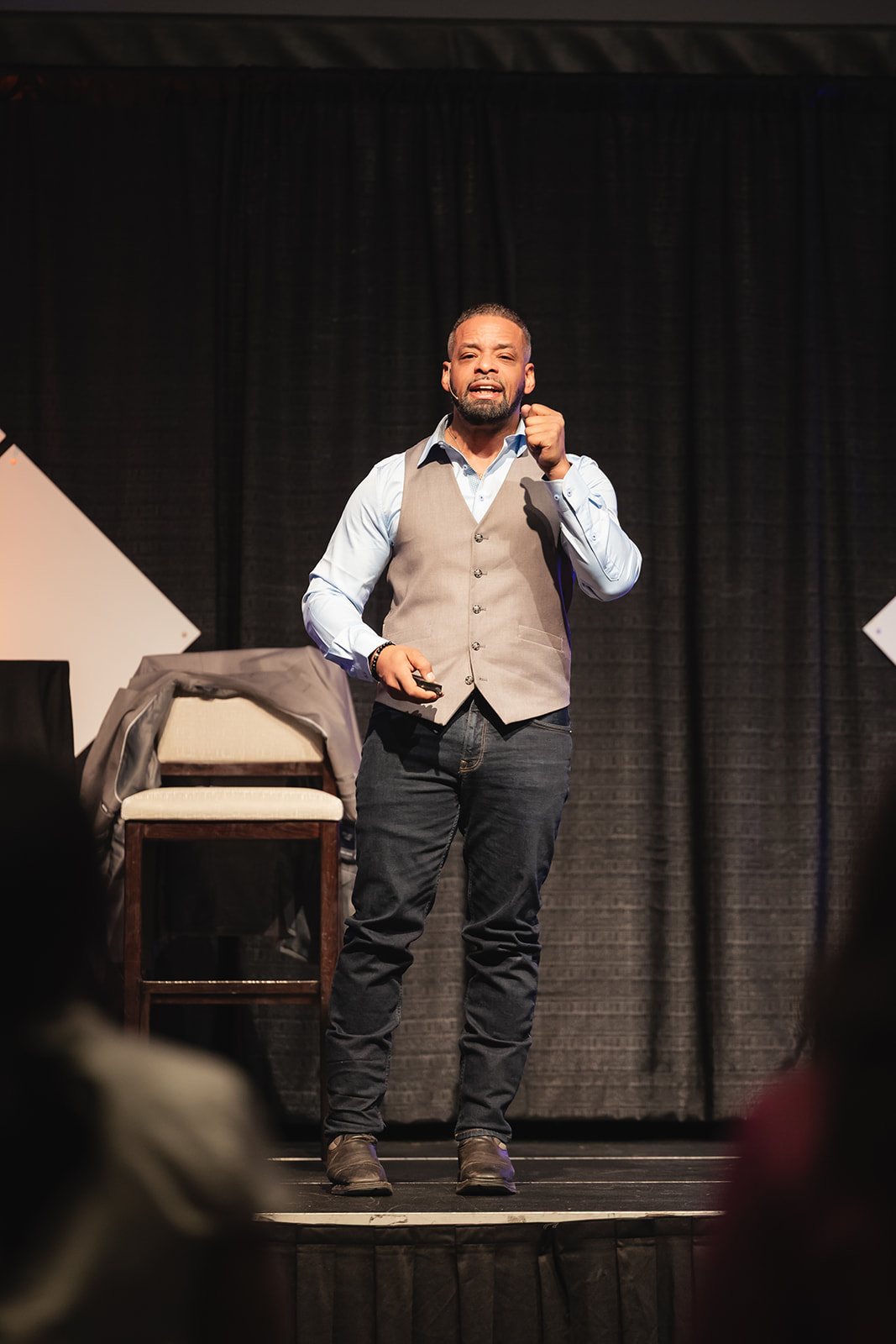
You know the feeling. You've practiced your presentation a dozen times. You've memorized the techniques—pause for effect, vary your tone, make eye contact. In rehearsal, you nail it. But the moment you're in front of a real audience, everything vanishes.
This isn't a failure of preparation. It's a failure of the approach itself.
The Two-Brain Problem
Here's what most speaking training misses: you effectively have two operating systems. One is conscious, rational, and capable of learning techniques. The other is automatic, emotional, and responsible for survival.
Under normal conditions, the rational brain runs the show. You can access your training, execute your plan, modulate your delivery. But under perceived threat—which is how your nervous system categorizes high-stakes speaking—the survival brain takes over.
And the survival brain doesn't care about your techniques.
Why Stress Erases Your Training
When your threat detection system activates, it creates specific physiological changes designed to help you survive:
- Blood flow shifts from the prefrontal cortex to large muscle groups
- Working memory capacity shrinks dramatically
- Fine motor control degrades
- Access to learned skills becomes impaired
This is why athletes "choke" under pressure. It's why you blank on information you know perfectly well. Your brain is prioritizing survival over performance—a reasonable trade-off if you were actually being chased by a predator, but problematic in a conference room.
The Technique Trap
Traditional speaking training makes a fatal assumption: that the skills you learn in a calm state will be available in a stressed state. They won't. Under pressure, you default to your most automatic patterns—which, for most people, are fear-based patterns learned years or decades ago.
This is why people who are excellent speakers in small groups can fall apart on stage. The context shift triggers a different neurological state, and their training becomes inaccessible.
What Actually Works
If the problem is nervous system state, the solution must address nervous system state. This requires a fundamentally different approach:
1. Train Under Simulated Pressure
Skills need to be learned in the state where they'll be used. This means practicing with deliberate stress induction—elevated heart rate, time pressure, real stakes—so your nervous system learns to maintain access to your training even when activated.
2. Make Regulation the Foundation
Before you learn what to do with your hands or how to structure your talk, you need to learn how to down-regulate your nervous system on demand. This becomes the foundation that makes everything else possible.
3. Build Automatic Patterns, Not Conscious Techniques
Conscious techniques require working memory—exactly what gets compromised under stress. The goal is to make your speaking skills so automatic that they don't require conscious attention. This takes repetition, but it's the only approach that's stress-proof.
4. Use the Body as the Entry Point
Since the survival response is body-based, the intervention must be too. Breath, posture, and voice are direct inputs to your nervous system. By working through these channels, you can interrupt the stress response before it derails your performance.
The Real Skill
The speakers who thrive under pressure aren't the ones with the best techniques. They're the ones who have learned to stay regulated when it counts. Their nervous system doesn't flip into survival mode when the stakes rise.
This is a trainable skill. But it requires going deeper than technique—to the operating system level where the real patterns live.
Stop practicing what to say. Start training how to be when you say it. That's the difference between techniques that fail and presence that holds.
Command the Room. Transform Your Organization.
Whether preparing your C-suite for high-stakes quarterly pressure or inspiring thousands at your annual conference, partner with Dr. Stephen Crawford to activate biological resonance and decisive leadership.
Read Next
Executive Presence Under Pressure: How Transformational Leaders Apply The Forging Model
Discover how transformational leaders apply Dr. Stephen Crawford's Forging Model to alchemize high-stakes pressure into grounded executive presence and authority.
Keynote Speaking & CultureDr. Stephen Crawford: Leadership Keynote Speaker and Executive Coach
Leadership keynote speaker and executive coach Dr. Stephen Crawford has reached 3M+ people in 33 countries. Booking from $5,000. Check availability.