Classroom, Boardroom, Auditorium: How Great Speakers Learn to Read the Room
Dr. Stephen Crawford
Speaker Performance Architect
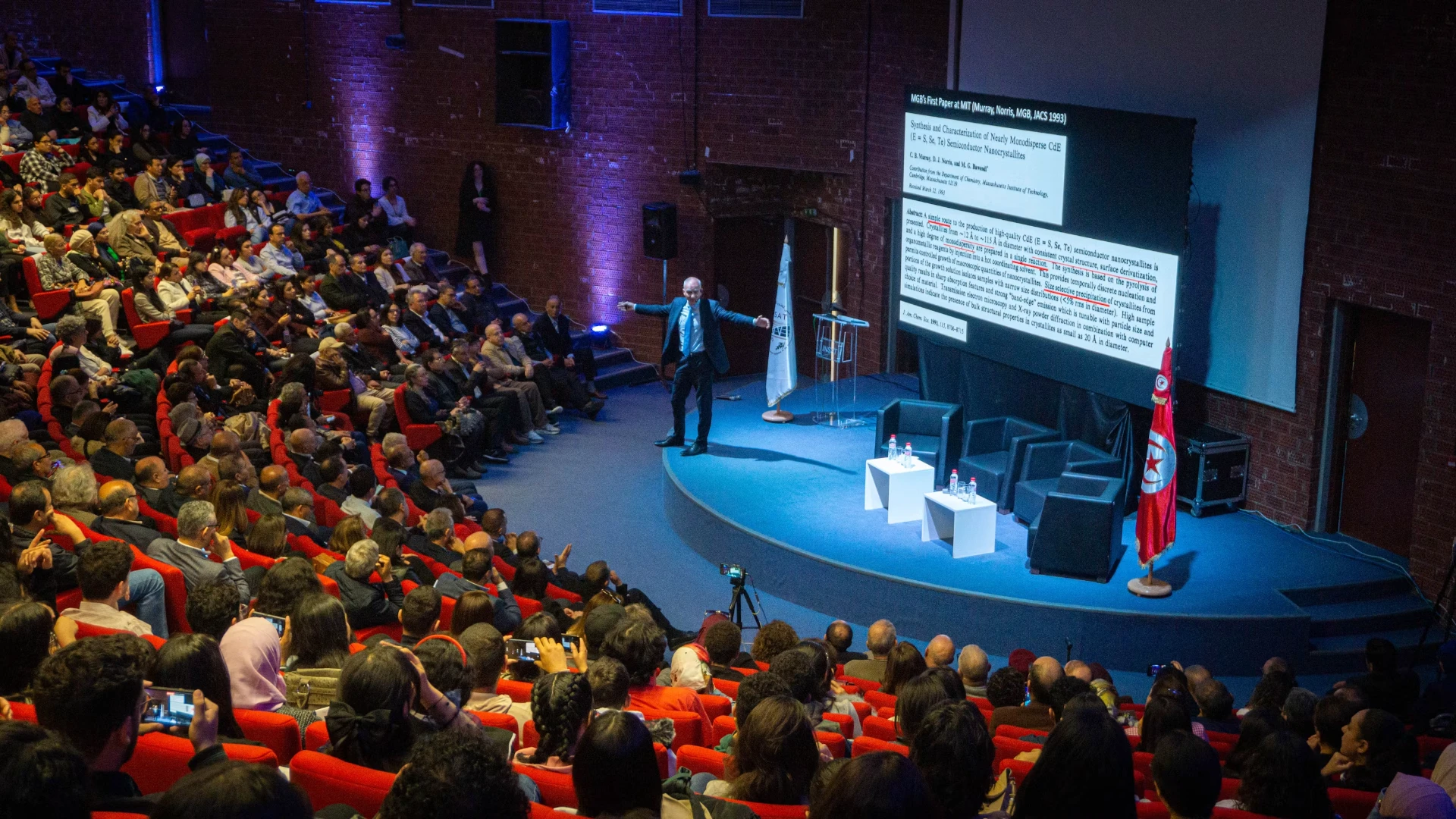
You can give a great presentation and still lose the room. I have seen it happen.
A leader walks into a conference room with twelve executives and absolutely nails it. Calm. Clear. Conversational. Nobody is checking their phone. The questions are sharp. The conversation keeps going after the meeting was supposed to end.
Then that same person takes essentially the same presentation onto a stage in front of 500 people. Four minutes in, something feels off. The ideas are still good. The stories are still good. The speaker hasn't suddenly forgotten how to communicate. But the room is gone.
That's because speaking isn't only about knowing what to say. It's about knowing what this particular room needs from you.
A classroom needs one version of you. A boardroom needs another. An auditorium needs another. Not three fake personalities — three different expressions of the same person.
That distinction may be one of the most important skills in public speaking, executive communication, and leadership presence.
The mistake I see strong communicators make all the time
Most public speaking training teaches people to improve the presentation. Fix the opening. Clean up the slides. Slow down. Make eye contact. Tell a better story. Those things matter. But a room isn't just a container for your presentation.
Walk into a workshop with fifteen people and everyone can see your face. They can see when you're thinking. They notice when you're uncomfortable. They notice how you react when somebody challenges you.
Move into an executive boardroom and the rules change again. Nobody needs twelve minutes of buildup before you get to the point.
Then walk onto a stage with 2,000 people and everything changes again. That subtle hand gesture that felt natural from six feet away? Most of the audience can't see it. That quiet conversational opening that worked beautifully around a conference table? It may disappear into a ballroom.
The content didn't suddenly become worse. The instrument changed. The best speakers learn how to change with it without losing themselves.
Think about the first ten minutes
Imagine I walk into a leadership workshop with 20 people. Ten minutes into the session, I ask a question. One person takes a risk and gives me an answer. It's not quite right.
What I do next matters more than almost anything on my slides. If I embarrass him, even accidentally, the other nineteen people learn something immediately: "Be careful here." The room gets quieter. People start editing themselves.
Now imagine instead that I stay curious. I explore the answer. "Say more about that." Or, "That's interesting. What led you there?" Suddenly everybody learns something different: "I can participate here."
Same content. Completely different room. That's why great facilitation isn't simply public speaking with fewer chairs.

Room One: The Classroom
Roughly 10 to 50 people
In a classroom, workshop, or leadership training environment, proximity changes everything. People are close enough to watch you — but they're also close enough to watch each other. That means participation carries a little social risk.
People wonder:
- Am I going to sound stupid?
- Is the facilitator actually interested in what I think?
- Are there right answers I'm supposed to guess?
- Can I disagree here?
You won't see those questions written on anybody's face. But they're in the room. So your first job isn't to impress the group. Your first job is to make participation safer.
This is why silence matters. Ask a good question and then wait. Not the fake two-second speaker pause where you answer your own question because nobody jumped in fast enough. Actually wait. Five seconds can feel like thirty when you're standing in front of people. Let it. Someone is thinking. Someone is deciding whether it is safe to answer. Someone is finding the words.
One of the biggest breakthroughs in speaker coaching happens when communicators stop believing that every empty second is their responsibility to fill. Sometimes silence is where the audience starts doing the work.
In a classroom, try:
- More conversation, more questions, more pauses.
- Less performance, less volume.
- More attention to individual reactions.
- More willingness to abandon your planned sequence when the room gives you something better.
Your energy also needs to come down. What feels dynamic from the back of a 1,000-seat theater can feel overwhelming when somebody is sitting twelve feet away from you. In a classroom, connection usually beats projection.
Room Two: The Boardroom
Roughly 5 to 20 people
Now take the chairs away. Put twelve senior leaders around a conference table. The rules change. This is where talented speakers sometimes get into trouble, because they walk in carrying stage energy. Big opening. Big personality. Long story. Dramatic setup. And ten minutes later they're wondering why the CEO keeps looking at the clock.
The executive boardroom isn't asking, "Can this person entertain us?" The room is quietly asking, "Can this person help us think?" That's different.

In a boardroom, get to the point
If I have an hour onstage, I may earn my way toward the central idea through a story. If I'm sitting across from twelve executives, I may give them the central idea in the first 90 seconds. Then we can explore it together.
Executives interrupt. That's not necessarily disrespect — they're processing. They test assumptions. They ask questions out of sequence. They may challenge the premise before you reach slide three.
This is why memorizing a presentation word for word can become dangerous. If your confidence depends on saying A, then B, then C, then D, somebody asking about D while you're still on A can knock you completely off balance. I would rather teach a speaker to know the architecture of the idea so well that they can enter it from almost anywhere.
That's when something interesting happens. You stop presenting at the room. You start thinking with the room.
The boardroom tests a different kind of confidence
You're explaining your recommendation. The highest-ranking person at the table leans back and says, "I don't agree." There's a tiny moment right there. Maybe half a second.
Do you rush to defend yourself? Talk faster? Start explaining your credentials? Back away from your own recommendation? Or can you simply say, "Tell me where you see it differently."
That is executive presence. Not dominance. Not volume. Not having a clever answer for everything. Staying grounded when the room stops giving you approval. People feel that.
Room Three: The Auditorium
From 100 people to thousands
Now walk backstage. You hear the introduction. You step into the light. And suddenly the person in the last row is 80 feet away. Welcome to completely different physics.
An auditorium eats subtlety. The tiny gestures that work around a table disappear. Your normal conversational rhythm can become visually flat. And now you're not responding to twelve individual nervous systems. You are working with hundreds — sometimes thousands — of people moving through an experience together.
A large audience moves in waves
In a smaller room, emotion can change sentence by sentence. Large audiences don't move that quickly. They move more like waves. You build. You release. You create laughter. You create tension. You become quiet. You let something land. Then you build again.
That is why a keynote should not feel like a 60-minute presentation delivered at higher volume. You're shaping an experience across distance.
And yes, you have to become bigger. Your gesture has to travel farther. Your voice needs greater range. Your movement needs intention. Your stories need clean turns. But here's the danger: you can't become so big that you become fake.
Amplitude without authenticity becomes performance. Authenticity without amplitude becomes invisible. A powerful keynote speaker learns how to increase the signal without changing the truth of the signal.
Same person. Different instrument.
I am not suggesting that you become one person in the classroom, another person in the boardroom, and somebody else on the main stage. Quite the opposite. The goal is to become so grounded in who you are that you can adjust how much of the signal the room requires.
Think of a musician. The song doesn't change simply because the venue changes. But you wouldn't use exactly the same amplification in your living room that you would use in an arena. Speaking works the same way.
| Classroom | Boardroom | Auditorium | |
|---|---|---|---|
| What the room needs | Safety to participate | Clarity and confidence | Energy and connection |
| Your energy | Slightly lower | Calm and compressed | Larger and sustained |
| Opening job | Make participation safe | Get to the point | Capture attention and set the emotional state |
| Common mistake | Talking too much | Trying too hard to impress | Playing too small |
| What builds trust | How you treat people | How you handle challenge | Whether your presence matches your message |
| Structure | Flexible | Framework-driven | Strong narrative arc |
| Silence | Spacious | Precise | Dramatic and intentional |
My ten-minute pre-room reset
Before I speak, I don't only ask, "Do I know my material?" That's the easy question. I want to know whether I am ready for this particular room. There are three things I pay attention to.
1. Unmask
What version of myself am I tempted to perform today? The expert? The charismatic speaker? The person who needs everyone to like him? The person determined to prove that he belongs in the room? Most of us have one. The problem is that the persona we use to protect ourselves can become the very thing standing between us and the audience. So I ask: What am I trying to protect right now? And can I put it down before I walk out there?
2. Unscript
I want structure. I don't want a cage. Know the ideas. Know the stories. Know where you're taking people. But leave enough room to respond to what actually happens. Because the moment somebody says something you didn't expect, the real presentation may have just begun.
3. Unleash
Finally, I ask a different question: What do I want this room to feel? Not only what I want them to know. If I want them calm, I can't walk in frantic. If I want courage, I can't spend the first five minutes negotiating for their approval. If I want honesty, I need to model honesty. You can't ask a room to go somewhere you're unwilling to go first. That's resonance.
Try this before your next presentation
Ten minutes before you walk into the room, stop rehearsing the opening for a moment. Look at the actual room. Who is sitting there? How far away are they? What happened before you arrived? Are they excited? Tired? Required to attend? Did they just finish lunch? Did the CEO announce a reorganization yesterday? Is this a celebration? A difficult season? A sales kickoff? A leadership retreat?
Those things matter, because you aren't speaking to "an audience." You're speaking to these people, in this room, on this day. The moment you understand that, public speaking becomes much less about performing perfectly — and much more about learning to listen before you speak.
Frequently Asked Questions
How do you connect with an audience you've never met?
Don't begin with demographics. Begin with friction. What are these people dealing with right now? What pressure are they under? What are leaders discussing in private that employees can already feel? What are people tired of hearing? What do they wish someone would finally say out loud? Good preparation isn't about pretending you know an audience you've never met. It's about becoming curious enough to understand the world you're walking into. When an audience thinks, "He understands where we are," you've earned permission to take them somewhere.
What is the difference between executive presence and stage presence?
They come from the same root but look different. Executive presence is often quieter — your ability to remain clear, grounded, and credible when someone challenges you from six feet away. Stage presence requires more amplitude, because you're communicating across distance. One requires compression. The other requires expansion. The strongest communicators learn both.
Can public speaking and executive presence actually be learned?
Absolutely. Some people begin more naturally expressive. Others are naturally calm. Some love the stage. Others would happily avoid it forever. Those are starting points, not sentences. You can learn story structure. You can learn how to manage your energy. You can learn to communicate from a framework rather than memorize paragraphs. You can learn to use silence. You can learn what to do with your body. You can learn to read a room. And most importantly, you can learn to do all of those things without becoming somebody else.
The question isn't simply, "Can you speak?"
A lot of people can give a presentation. Far fewer can walk into a classroom, a boardroom, and an auditorium and create connection in all three. That's where communication becomes leadership.
If you've noticed that you are powerful in one kind of room but seem to lose something when the room changes, that's not necessarily a confidence problem. It may simply mean nobody ever taught you how to change the instrument. And that can be trained.
Bring me the rooms you actually have to lead: the board meeting, the keynote, the sales kickoff, the executive retreat, the difficult conversation. Because we don't need to turn you into a different speaker. We need to make sure the real one can reach every seat.
Read Next
Leadership Coaching Services: Transform Your Executive Presence and Team Leadership with Neuro-Encoding
Discover how Neuro-Encoding leadership coaching rewires neural patterns for authentic authority, enhances executive presence, and builds high-performance teams.
LeadershipKeynote: Building Thriving Innovation Ecosystems for Leadership and Growth
Explore how innovation ecosystems drive collaborative growth, startup partnerships, and leadership development through strategic frameworks and open innovation.